
The Gloster brand made its first entrance into the United States in 1995 in quite the humble manner. After starting out operating in a shared office and warehouse space with a bookcase business owned by company shareholders in South Boston, Virginia, the Gloster brand maintained a relatively nomadic existence in the U.S., bouncing around various office and warehouse facilities throughout the small town. In 2007, this vagabond status was left behind for good with the acquiring of a South Boston facility that still makes for Gloster’s home through today: a 550,000 sq. ft. joint office and warehouse location. During this period of Gloster’s history, the American market began as secondary to the business done in Europe, where the warehouse in Bristol, U.K. would fill up with stock of teak furniture every winter only to be emptied by the end of the summer. However, as time went on the American market steadily grew in prominence, eventually supplanting Europe as the hotbed of Gloster’s business. Thanks to Paul Wallevik’s vision and impetus to invest in the market early, Gloster was firmly established in America and ready to be a leading brand in the rapidly ascending market.
During the same time as this internal transition with Gloster was gradually taking shape, the market for outdoor teak furniture was shifting as well. Early in the 1990s, classically styled all-teak outdoor furniture was at the top of the market. However, as the decade wore on design trends began to shift, with new fashions and materials gaining greater traction. Mixed material furniture that combined teak with materials like stainless steel, aluminum, and wicker became a hot commodity, and contemporary and modern design trends supplanted the traditional styling that had previously defined the market. Quick to pick up on the changing direction of the industry, Gloster began to develop new styles of “mixed material” furniture, finding success early on with innovative collections like young Swedish designer Steffan Hultgren’s Riviera collection.
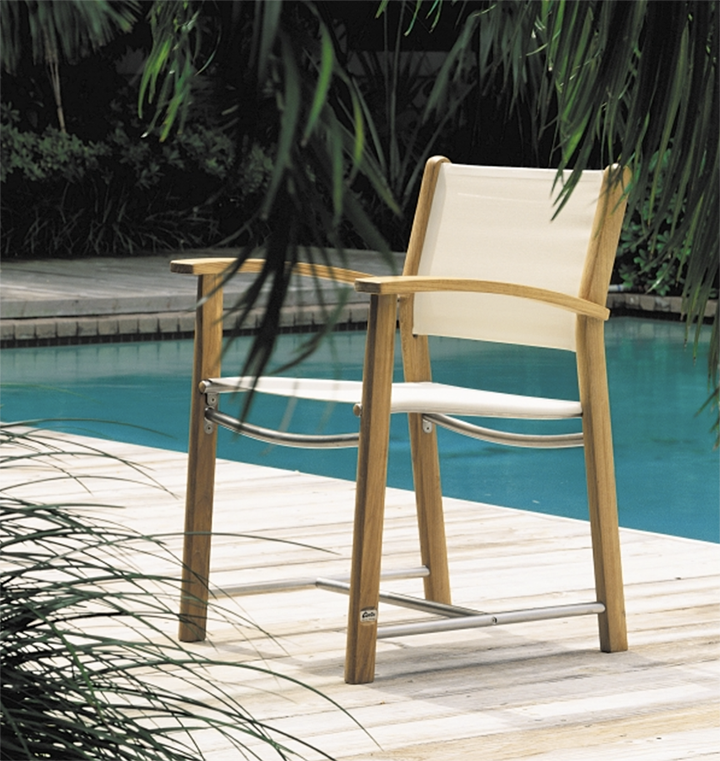
Gloster Riviera Chair
As pure teak furniture continued to fall more and more out of favor by the early 2000s, Gloster’s business model adapted in order to stay with the times. Innovation in the industry during this time was fierce, with clients demanding new collections every season and the use of innovative, new materials coming to be expected. The Kingfurn factory in Indonesia began to diversify production capabilities, adding a metalworking and upholstery department to run alongside the teak production line. Some of the new introductions became essentials of the Gloster catalogue, while others experienced short lifespans in our product line. Such is the territory when it comes to rapid innovation and the development of expertise in craftsmanship.
In 2003, Gloster made it’s first foray into the world of outdoor wicker with two collections created by renown American designer John Caldwell that became instant hits: The traditionally styled Plantation collection and the more modern Manhattan, the former of which existed as a staple Gloster product throughout its 15-year run in our catalogue. Emboldened by the reception for these innovative collections, Gloster continued to gain confidence and experience with producing outdoor wicker furniture, culminating with the 2007 unveiling of the iconic Eclipse Daybed by award-winning London designer Mark Gabbertas. In 2010, Gabbertas produced yet another hit for Gloster with the Cloud collection, a category-defining modular sectional seating group that formed an entirely new category of outdoor furniture: the “Outdoor Lounge”. With a stainless-steel frame supporting plush cushions upholstered in pioneering new outdoor fabrics, Cloud quickly asserted itself as the preeminent collection in the Gloster catalogue and the precursor to the modern collections of Grid and Maya.
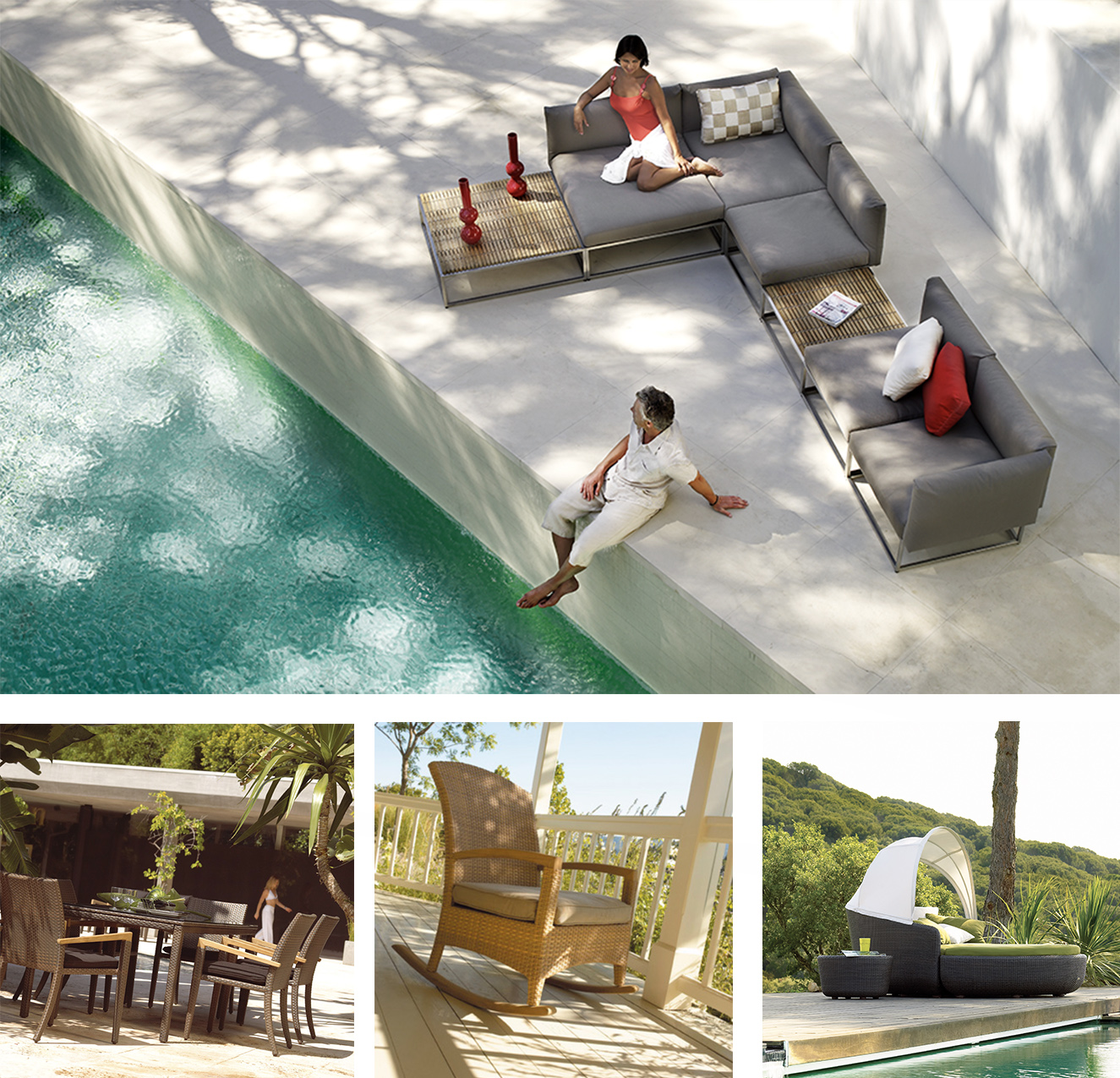
Top Cloud; Left to Right: Manhattan, Plantation and Eclipse.
By 2011, the Gloster brand once again found itself at an inflection point. Paul Wallevik bid farewell to the organization he raised from humble beginnings, retiring to split time between the Caribbean and his native Denmark and selling his shares in the company to his long-time Swiss bankers, Diethelm Keller. On the business operations side, Gloster was in the midst of a re-orientation of our base of customers. As the retail market waned in the United States, the interest in Gloster products from the professional interior design community grew, with Architects and Designers becoming more and more attracted to the well designed, high quality products that made up the Gloster catalogue. A joint venture to secure the lucrative California Architect and Design community resulted in the opening of Gloster’s first studio in Los Angeles’ design district in 2012—a decision that was key to shaping the next chapter of Gloster’s journey…
Want to catch up on the first two chapters of Gloster’s History? Explore them by clicking on the below links.